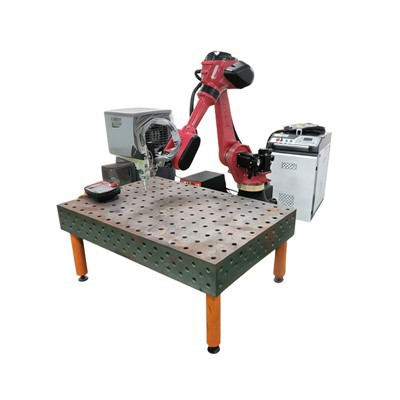
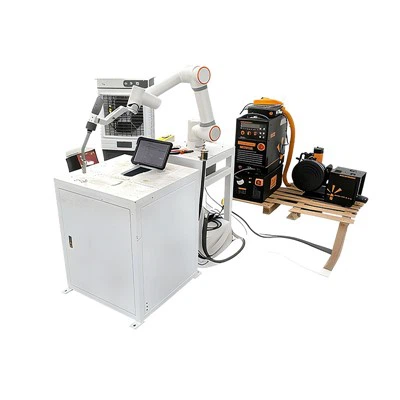
1. Human-Robot Collaboration
As robots evolve from operating at a distance from humans to interacting and collaborating naturally with them, the maturity of drag-and-drop teaching and human-assisted instruction technologies has simplified programming, reduced the professional requirements for operators, and facilitated the transfer of skilled workers' expertise.
2. Autonomy
Currently, robots are evolving from manipulated operation modes such as pre-programmed, teach-and-playback control, direct control, and teleoperation towards autonomous learning and operation. Intelligent robots can automatically set and optimize trajectories based on work conditions or environmental requirements, automatically avoid singularities, predict interference and collisions, and avoid obstacles.
3. Intelligence, Informatization, and Networking
Increasingly, 3D vision and force sensors will be used in robots, making them increasingly intelligent. With advancements in sensing and recognition systems and artificial intelligence, robots are evolving from being controlled unidirectionally to storing and applying their own data, gradually becoming more informatized. With advancements in multi-robot collaboration, control, and communication technologies, robots are evolving from independent entities to interconnected, collaborative systems.